PULLMAN, Wash. — Aniket Kamboj is a Doctorate student researching extrusion process engineering and rheological characterization of structured plant-protein systems.
Tell us a bit about your background—professional and/or personal.
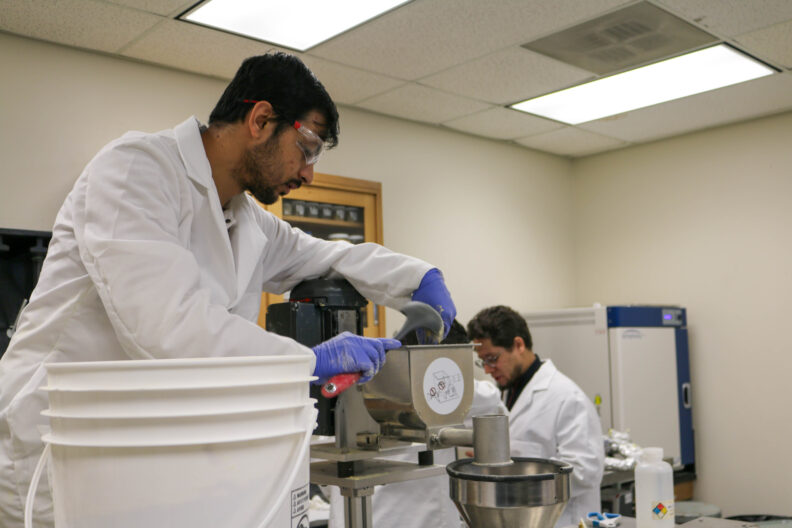
I’m originally from India, where I completed my undergraduate degree in Dairy Technology and later a master’s degree in Food Technology and Management. I am currently pursuing my Ph.D. in Food Science at Washington State University. My research is primarily focused on food extrusion, plant proteins, rheology, and understanding how processing conditions influence the structure and texture of foods. Over time, I have become especially interested in connecting food engineering with practical problems that are relevant to both researchers and the food industry.
What drove you to pursue Food Science?
What attracted me to Food Science was the fact that it combines so many different areas: engineering, chemistry, biology, nutrition, and even consumer experience. Food is something everyone interacts with every day, but there is a tremendous amount of science behind how ingredients are processed and transformed into the products we see on store shelves. I really liked the idea of working in a field where scientific research can eventually lead to something very practical and tangible.
Can you describe your research interest and what made you pursue it?
My main research interest is understanding how food materials, particularly plant proteins, change during processing. I work extensively with extrusion, which uses combinations of heat, pressure, mixing, and flow to transform ingredients into new structures. What interests me most is understanding why a particular structure forms rather than simply finding a processing condition that works. That naturally led me toward studying material properties, rheology, protein interactions, and the relationship between processing conditions and the final texture of a food product.
What direction would you like to see extruded meat analogs or extrusion in general go in the future?
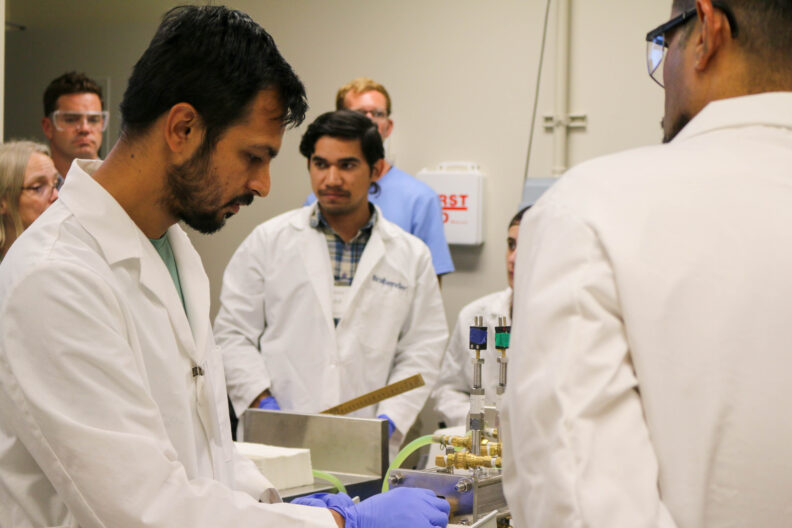
I think the future of extrusion needs to move toward more science-based and predictive processing. Traditionally, extrusion can involve a lot of experimentation: changing temperature, moisture, screw speed, or formulation until the desired product is obtained. I would like to see us better understand what is actually happening to the material inside the extruder and cooling die so that we can predict the final structure. That could also allow extrusion to work with a much wider variety of ingredients, including alternative proteins, agricultural byproducts, and more sustainable raw materials.
Extrusion is incredibly versatile for the food industry, so what led you to plant-based meat analogs specifically?
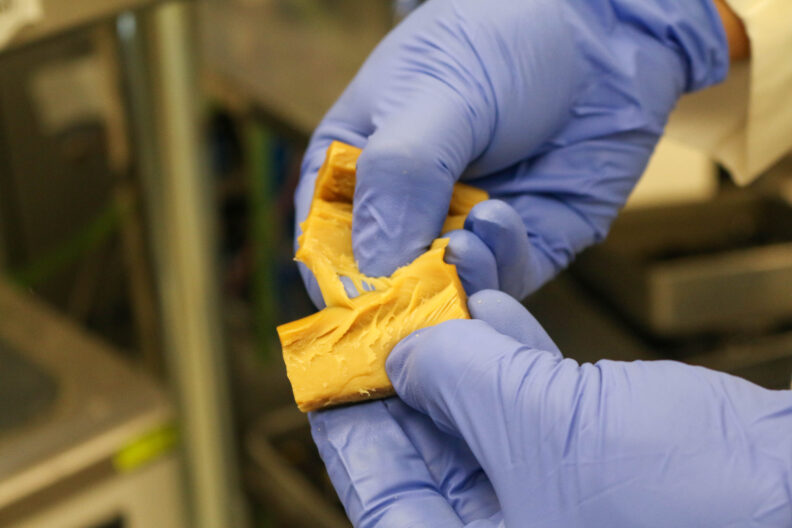
Plant-based meat analogs are a fascinating problem from both an engineering and a food science perspective. We are essentially starting with plant proteins that do not naturally have the organized fibrous structure of muscle and then trying to create that structure through processing. High-moisture extrusion provides a very interesting environment where heat, shear, pressure, flow, and cooling all work together to reorganize those proteins. For someone interested in processing and material behavior, it is a very challenging but exciting system to study.
Extrusion has been described as almost like an art because of how variable or unpredictable it is. How do you navigate that unpredictability in your research?
I actually agree that extrusion can sometimes feel like an art, particularly when you first start working with it. A small change in moisture, temperature, formulation, or even feeding behavior can completely change the final product. My approach is to try to convert as much of that “art” as possible into measurable science. We monitor processing variables such as temperature, pressure, energy input, flow behavior, and product characteristics, and then try to understand the relationships between them. The goal is not only to say that one condition worked better, but to understand why it worked.
What do you find most interesting or exciting about leading extrusion demonstrations?
One of my favorite parts is watching people see extrusion in action for the first time. You can start with something that looks like a simple flour or protein powder, add water, and within a very short time it emerges from the extruder as a completely different structured product. It makes many of the concepts we discuss in food engineering much easier to understand. I also enjoy interacting with students and industry professionals during demonstrations because they often ask very different questions, which can lead to interesting discussions about the process.
Do you have a favorite extruded snack or food?
It is difficult for me to choose only one now because working with extrusion has changed the way I look at these foods. Whenever I eat an extruded snack, I usually start thinking about things like expansion, texture, moisture, formulation, and processing conditions instead of simply eating it! But I have always enjoyed crispy, expanded snacks, especially because it is impressive how something with such a light and crunchy structure can be created from relatively simple ingredients.
What’s a favorite experience or accomplishment during your time at WSU?
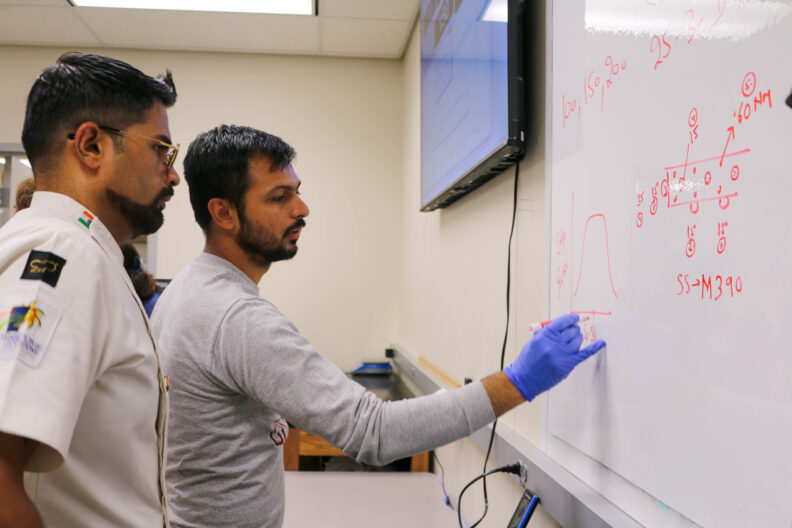
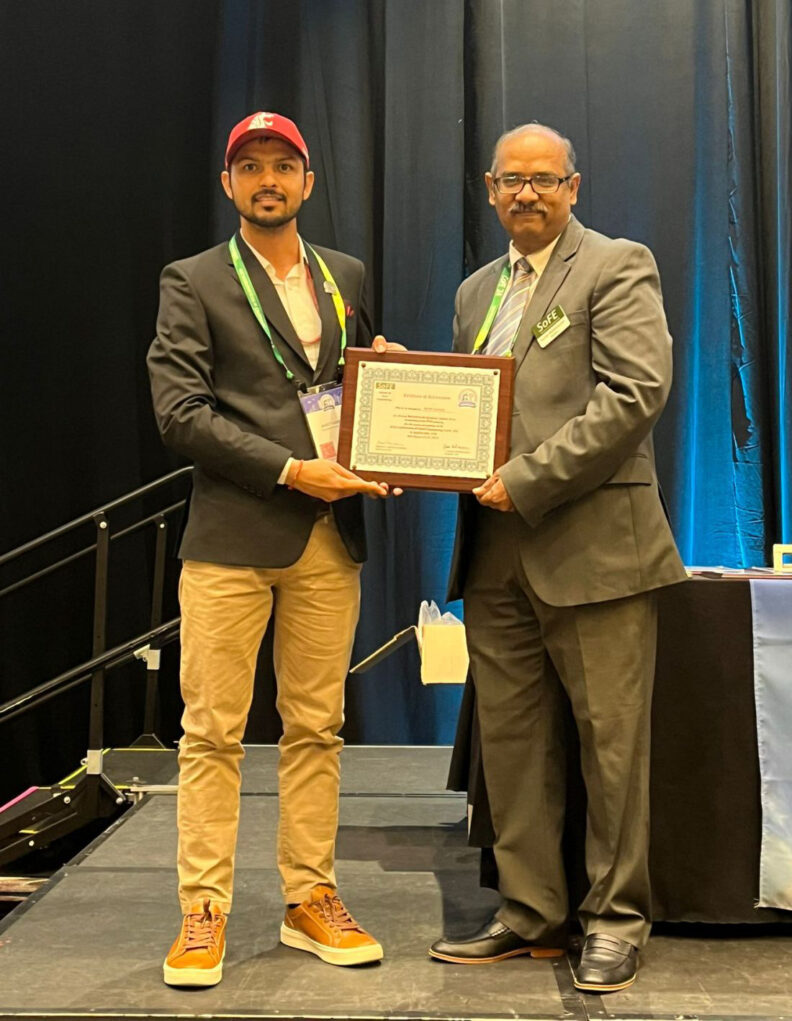
One of the most rewarding experiences has been seeing my role gradually change from being someone learning extrusion to someone who can conduct independent experiments, troubleshoot processing problems, present research, and help others understand the technology. I have also had opportunities to present my research at conferences, participate in extrusion workshops and demonstrations, and interact with researchers and industry professionals. Winning second place for my Ph.D. poster at the Conference of Food Engineering was also a meaningful milestone because it showed me that the research questions I was working on were interesting to people beyond my own laboratory.
Looking ahead, what are you hoping to do after you graduate?
I would like to continue working in research related to food engineering, ingredient functionality, extrusion, rheology, and alternative proteins. In the short term, I want to continue strengthening the fundamental side of my research while also working on problems with clear industrial relevance. Long term, I would like to be in a position where I can develop my own research program, work with students and collaborators, and help bridge the gap between fundamental food science and real-world food processing.
Any advice for undergraduate students looking to pursue a graduate degree?
I would tell students not to pursue graduate school simply because it seems like the next academic step. Graduate research requires patience because experiments fail, equipment does not always behave as expected, and research questions often become more complicated rather than simpler. It helps tremendously if you are genuinely curious about the problem you are working on. I would also encourage students to choose their advisor and research environment carefully; the people you work with can be just as important as the research topic itself.
Any parting words?
I think curiosity is one of the most valuable qualities a student or researcher can develop. Do not be afraid to ask basic questions, work outside your immediate area, or admit when you do not understand something. Some of the best research ideas come from connecting concepts that normally belong to different fields. For me, that has meant bringing together food processing, engineering, rheology, material science, and protein chemistry to better understand something as familiar as food.