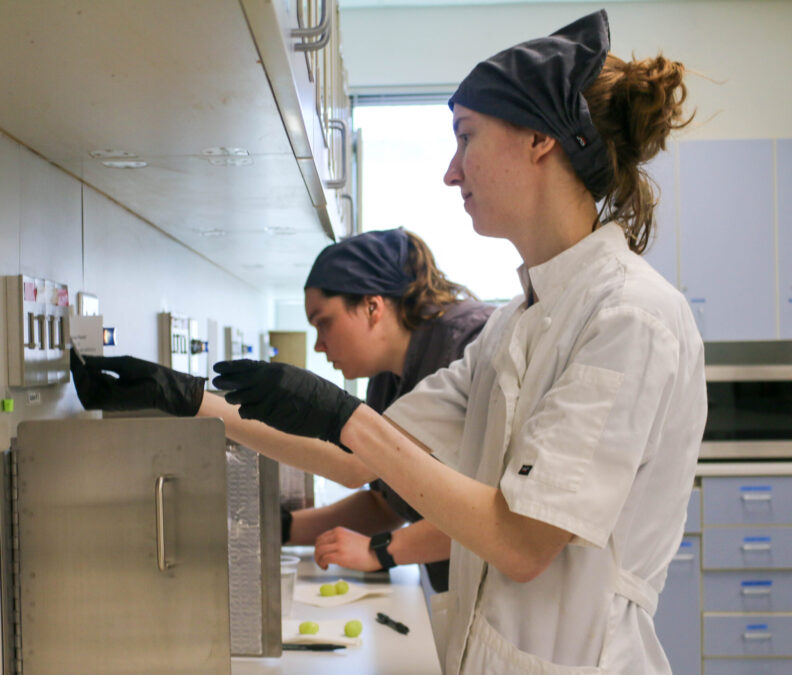
PULLMAN, WA. – Rachel Potter is a doctorate candidate in Dr. Carolyn Ross’ lab, researching the detection of wine faults using the electronic tongue and better understanding food preferences of children with intellectual and developmental delays.
Would you mind telling me a bit about your background, as much professionally and or personally that you’d like to share?
I’m from Pennsylvania. I grew up in Bucks County, which is north of Philadelphia. That’s where I grew up for all of my childhood, so I’m definitely an East Coaster at heart. I did my undergrad at Penn State University in University Park, Pennsylvania, and I studied food science. I’m a PhD. Candidate at Dr. Ross’ lab and I am reaching the end of my fifth year of grad school.
What drove you to pursue Food Science and then Sensory Science?
Like a lot of high schoolers, I was unsure of what I wanted to do, but I knew I wanted to do something within science and I wanted it to be applied. Originally, I thought I wanted to do plant science. I went back and forth with a lot of different things and even considered speech language pathology. I went to an accepted student’s event at Penn State, and listened to presentations and I heard a couple of different students talk about food science. That’s when I knew what I wanted to do. I started studying food science and I never changed it.
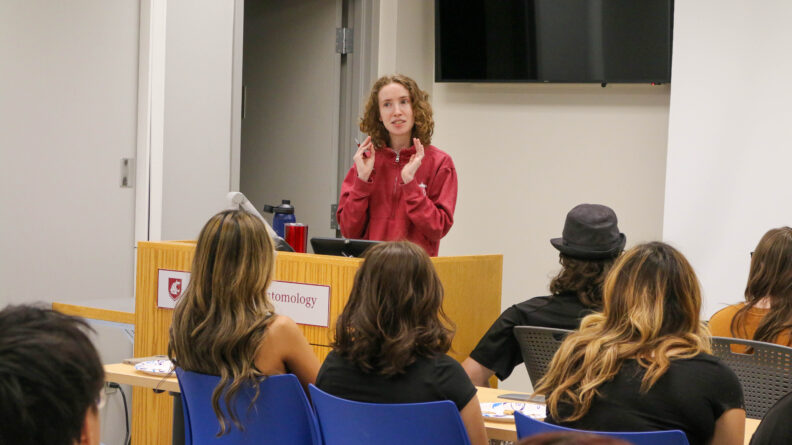
During my undergrad, I did an undergraduate research program. I knew right off the bat that I wanted to do research. I applied to the NASA Women in Science and Engineering Research program, which is available for all freshmen undergrads. I got accepted and then I was matched into a lab where they did sensory research, and specifically the intersection between sensory research and analytical chemistry. So while I was in that research program, I did a project looking at the volatile profiles of honeys that were collected from hives in the Philadelphia area in different rural, suburban, and urban locations. I compared the volatile profiles to the compounds that make it smell the way it does depending on where the hives were located. I had a really positive experience with the program and loved being able to do research.
When I applied to grad school, I chose Sensory Science because I had a really good experience with it during that research project from my undergrad.
How did you find Dr. Carolyn Ross?
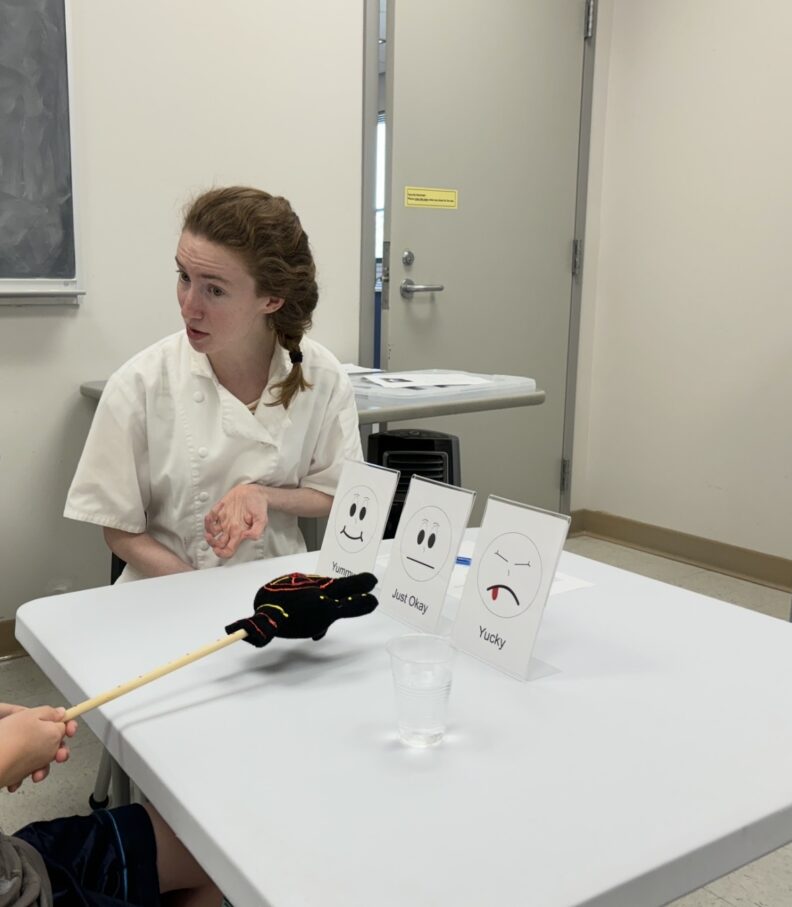
Dr. Ross and her lab works on the intersection between Sensory Science and analytical work. So we look at the two and the relationships between the two, and I knew I wanted to do that. I was also particularly interested in Dr. Ross’ research in children with down syndrome because it’s a very unresearched population in the world of Sensory Science.
What do you wish more people knew about Sensory Science?
There are a lot of things I wish people knew, but I’ll start with a big one that really sticks out to me. It’s a very statistics heavy field, and I don’t think a lot of people going into it during grad school really recognize how many statistics classes you have to take. Whenever you’re working with people, you’ve got to do a lot of stats, but it can get really interesting. I’ve learned a lot in grad school about statistics that I never thought I was ever going to learn. So, if you’re interested in data science, I think it’s a great fit. It’s something you can’t separate from the field though.
Would you recommend working in the industry first before pursuing a graduate degree?
It’s different for everyone. If I could give advice to someone like an undergrad that wants to go to grad school, I would say get some industry experience through an internship or a co-op before you start grad school. I think it gives you a good perspective about what industry is like, because otherwise you wouldn’t have any perception of it. Academia is a whole world in itself, so I would recommend dipping your toes outside of academia a little bit before starting grad school. Just so you know what you want and you’ll have a better idea when you finish school.
What has been your favorite sensory panel that you’ve conducted or supported?
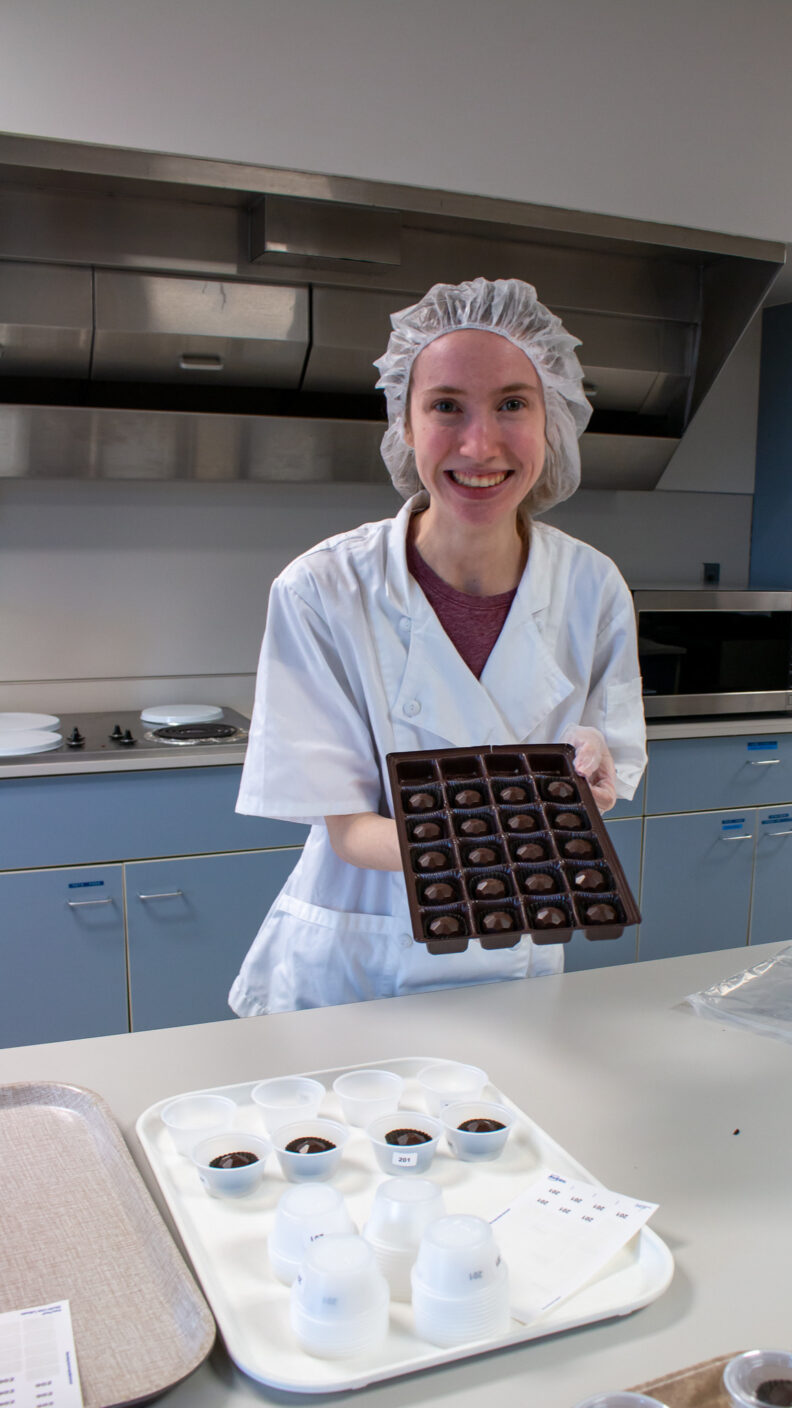
We did a chocolate and music panel a couple years ago and it was so fun. We gave each panelist their own set of headphones and then we would have them sit at the iPad and we’d give them four different truffles, and they were tasting replicates. There were two different flavored truffles and they’re tasting each flavor twice with two vastly different soundtracks. The company wanted to see how their perception changed with two completely different soundtracks while eating the chocolate and listening to the music. It was a super cool project.
What has been a favorite memory or accomplishment from your time here at WSU?
This past summer, I presented my research at Pangborn, which is an international Sensory Science conference that happens every two years. It was a big deal that it was in the United States the past year, not just that it was in the US, but it was also in Philadelphia, so I got to go home. It was a really incredible conference. It was like everyone in one room that I could ever want to talk to. I gave a presentation on one of the studies from my dissertation research on practitioner suggested foods for children with intellectual and development delays. It felt like such a big accomplishment to present alongside a lot of really incredible sensory researchers, and it was insightful to learn about the groundbreaking research happening in the field. I left that conference so inspired.
What are you hoping to do after you graduate?
To be honest, I’m not really sure what I want to do yet, but I do know that I still like research. It’s why I’m here and why I did my master’s and decided to stay for a PhD. I would say that I’d like to do be in any research role wherever I’m at, whether that’s in the industry or academia.
Anything else you’d like to add?
I think keeping a work life balance is important, so I do musical theater sometimes. This past year I was in Fiddler on the Roof. In Moscow, there’s a community theater group that I got to be a part of. I think it helps your brain work in creative ways when you’re doing something artistic. I find that when I’m doing something creative, like musical theater, or crocheting a sweater, it helps me with my research in different ways. I can be more creative in how I approach things. If you have the time for it during grad school, I recommend just doing something creative and different from your day-to-day routine.