Swapnika Medikonda is a doctoral student working in Dr. Claire Murphy’s lab, primarily working on understanding and mitigating food safety risks during post-harvest production of tree fruit industry
Tell me a bit about your background – professional and/or personal?
I am Swapnika Medikonda, from India. I completed my bachelor’s degree in engineering, specializing in food science and management. I then pursued a European master’s in sustainable food Systems engineering, technology, and management as an Erasmus Mundus scholar. This program allowed me to study in four European countries over two years, which was a highly enriching experience both academically and culturally. During my master’s, my research focused on understanding antimicrobial properties achieved through cold atmospheric plasma and evaluating the efficacy of spray-dried essential oils.
After graduating, I worked in the industry for approximately three years in various research and development roles. My experience ranges from developing new mycelium-based vegan products to working on solutions to extend shelf life and developing antimicrobial solutions for pathogens for an ingredient manufacturing business.
Outside of work, I am an active person who enjoys traveling and reading books.
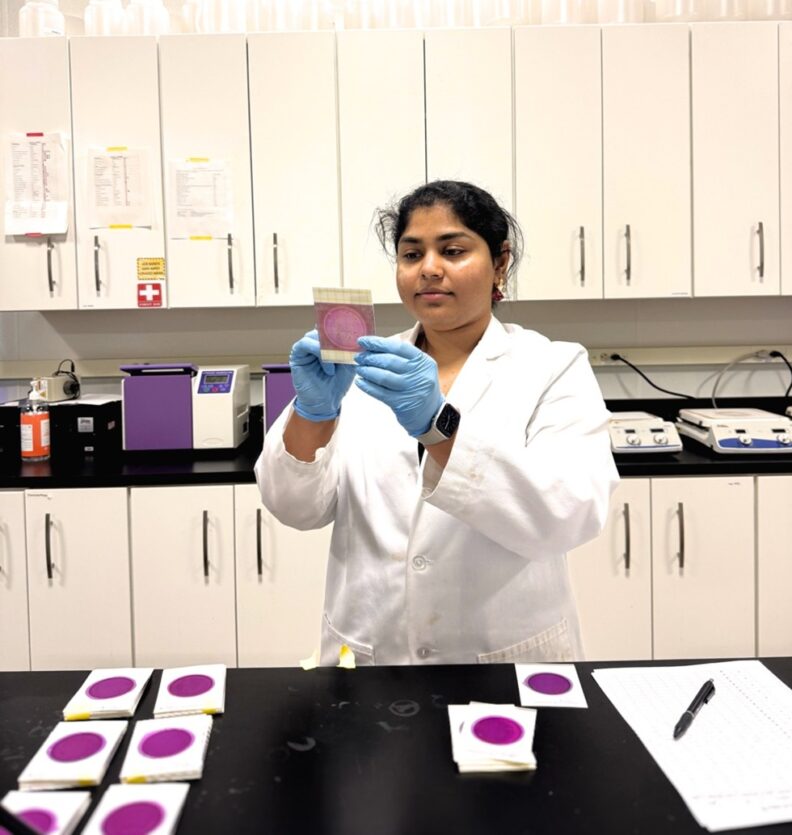
What drove you to pursue Food Science?
I wanted to pursue something in the realm of biology because I was always very interested in it during school. Whatever path I chose, I knew I wanted it to be connected to biology or microbiology in some way. I explored several options, and Food Science stood out to me because food is such an integral part of our daily lives.
When I first learned about food engineering and food science as a field, it immediately caught my interest. At that point, I honestly did not know much about it, but the more I explored, the more fascinating it became. Food Science is incredibly diverse, with many different areas, and being strong in one does not necessarily translate to another, which makes the field both challenging and exciting.
One of the biggest motivating factors for me was realizing that food is essential for everyone. It is one of the few fields where your work can have a direct and meaningful impact on consumers.
Can you describe what you’re researching now and what made you pursue it?
One of my first roles was in food microbiology research. What really interested me was seeing how much of food production is centered around ensuring food safety. There are so many critical control points aimed at preventing contamination from pathogens, spoilage microorganisms, and environmental factors such as moisture and oxygen.
While working, I realized I wanted to focus more specifically on food safety. Produce safety particularly interested me because, unlike processed foods such as milk or meat products, fresh produce typically does not undergo a heat treatment step to eliminate pathogens. This makes prevention and monitoring extremely important.
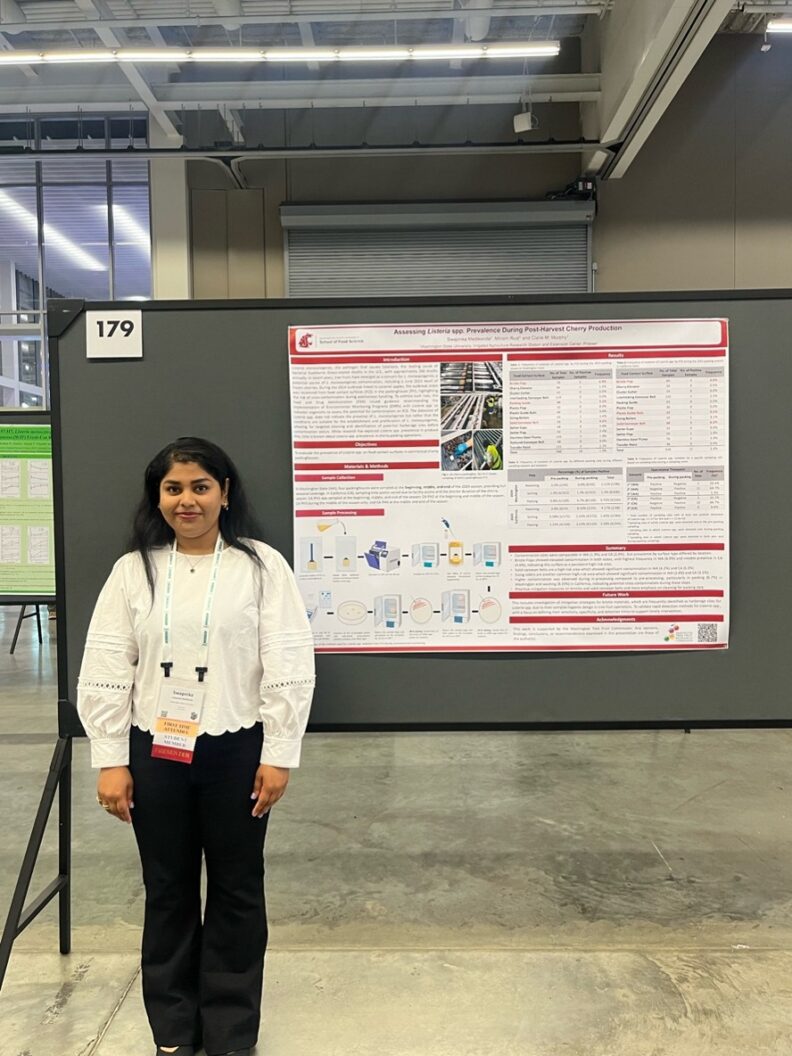
There is a strong need for science-based guidance that is also practical for growers and the industry. That connection between research and real-world application is what drew me toward produce safety.
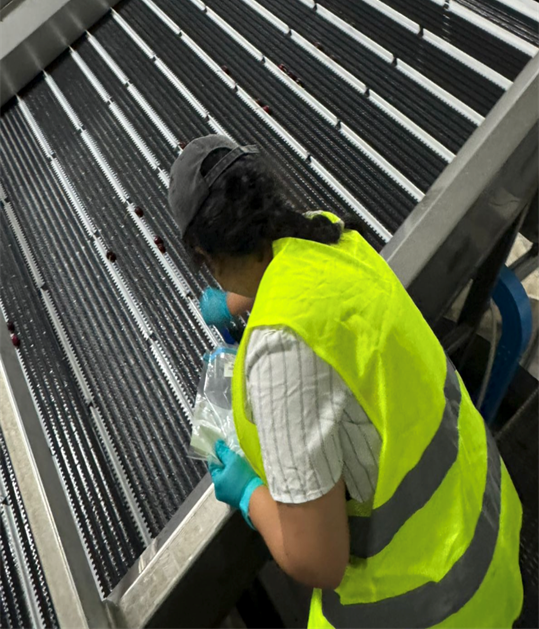
Currently, my research focuses on understanding and mitigating food safety risks in the tree fruit industry, specifically cherries. The cherry industry is a major sector in Washington. As part of my work, I conduct environmental monitoring of Listeria spp. by visiting commercial cherry packinghouses to identify high-risk locations and better understand areas that may support pathogen persistence and also evaluate rapid detection test kits. It has been a very rewarding experience because I get to work both in the lab and directly with the industry. I interact with growers and packing facilities while conducting research, and I hope our work helps the industry make more informed, risk-based food safety decisions.
What are some of the challenges of controlling outbreaks in cherries?
As mentioned earlier, one of the biggest challenges is that fresh cherries do not undergo a heat treatment step, so prevention and sanitation become extremely important. Proactive measures to reduce cross-contamination are critical.
Another challenge is the short cherry season, which typically lasts only three to four months. During this time, packinghouses handle a large volume of fruit with high throughput and significant labor demands. In such fast-paced environments, maintaining consistent cleaning and sanitation practices can be difficult.
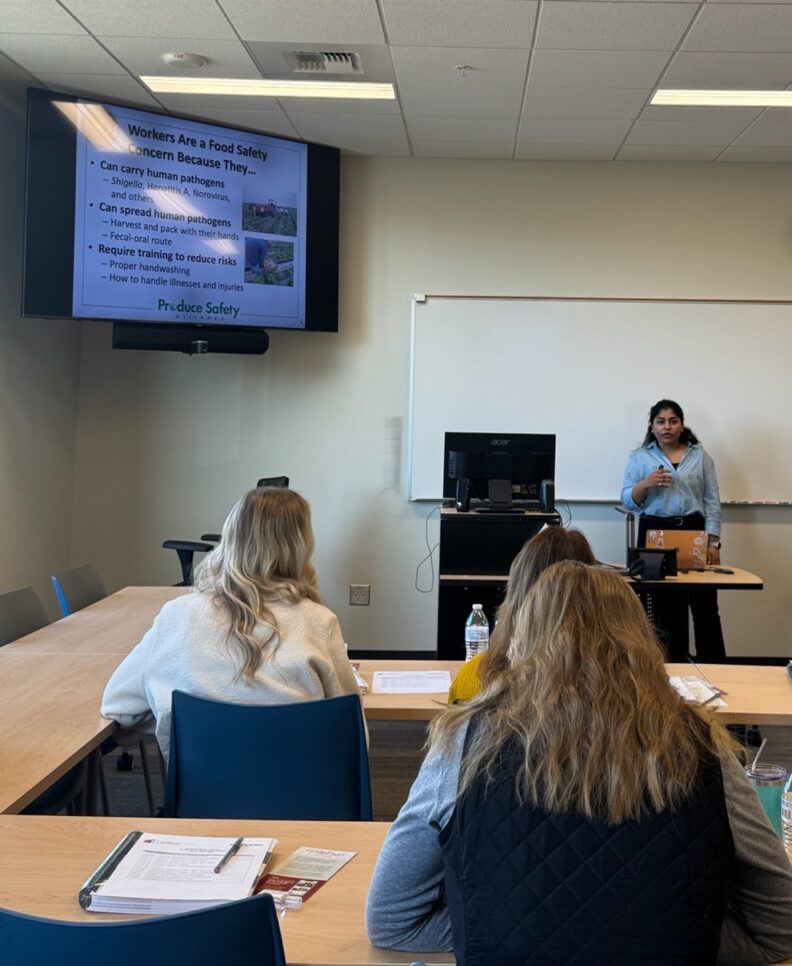
Even under production pressure, strong sanitation programs and hygienic practices must be maintained. The human factor can therefore become a significant challenge in these settings.
Since there is no heat treatment, the industry relies heavily on sanitizers in process water to help control contamination risks. Equipment design is another important factor, as certain structures can retain moisture and organic debris, creating environments where pathogens like Listeria may persist.
One limitation is that relatively little research has been done to identify which equipment or areas within cherry packinghouses present the highest risks. Given that the Pacific Northwest produces a major share of cherries in the United States, even small food safety issues can have significant impacts. This knowledge gap is one of the reasons behind our research focus on identifying risk areas and supporting science-based decision-making in the industry.
What do you think is one of the most pressing food safety issues today?
One of the biggest challenges in food safety today is that it is truly a shared responsibility. Food safety depends on many people, processes, and systems all working correctly at every stage.
From production and processing to transportation and handling, every step matters. For food to be safe, everything has to function properly. Workers at all levels must follow hygiene and sanitation practices, including proper handwashing, correct handling procedures, and adherence to established safety protocols. Even small lapses at one stage can have widespread consequences downstream.
I think accountability is key. Everyone in the food system has a role in protecting consumers, and food safety only works when each person understands the importance of that responsibility. Since food impacts everyone’s daily life, maintaining strong food safety standards is critical not only for the industry but also for public health.
What has been your favorite accomplishment or memory of yours during your time at WSU?
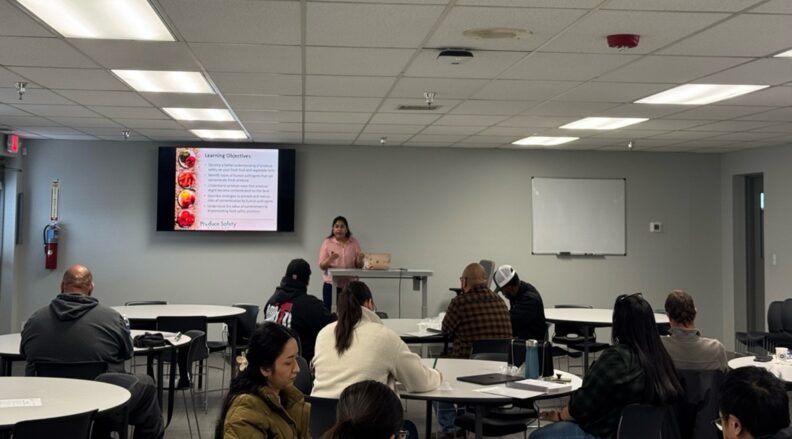
One of the most memorable experiences was my first visit to a cherry packinghouse. I was struck by its scale and the sheer volume of cherries processed daily. Additionally, all extension-related trainings and experiences have been very rewarding. They have highlighted the strong connection WSU has with the industry. Dr. Claire Murphy has done an excellent job maintaining these relationships and creating opportunities for us to visit facilities and conduct applied research.
You presented at the CAHNRS 3 Minute Thesis this spring, what pushed you to participate?
I like taking part in opportunities that help me stay connected with the main campus. Since I am based at a research and extension center in Prosser, there can sometimes be a disconnect between activities happening in Pullman and those at IAREC.
Participating in events like the CAHNRS 3MT helps bridge that gap, allowing me to stay engaged with other labs while also showcasing the research happening in our lab. Our lab strongly encourages participation in such events.
As a graduate student, it is always valuable to practice translating research for a general audience. I also provide training to farmers and growers, so I actively seek opportunities to strengthen this skill.
What are you hoping to do after you graduate?
I am very interested in research related to extension. Even during my time in industry, I always wanted to be closer to applied work and see the direct impact of my research.
Moving forward, I would like to stay involved in both research and extension.
Do you have any advice for an undergraduate student looking to pursue a graduate or doctorate degree?
I would highlight a few key points. First, find an advisor whose research aligns with your interests and who understands what matters to you. Having the right mentor is one of the most important factors for success.
Second, take every opportunity to gain experience through internships or research programs. My own path involved working across different areas before I discovered my interest in food safety research.
Would you recommend working in the industry first before pursuing a graduate degree?
It really depends on the individual. For me, it was extremely valuable. It helped me build strong industry connections and gain practical experience, which later translated into meaningful perspectives in my research.
That said, there is no single correct path.
Any parting words?
Food safety is a field that has an impact on people’s lives, and that is something worth being proud of. If you came from another country or took a non-linear path through industry before returning to academia, those experiences are not detours, they are what make your perspective valuable and your research meaningful. Seek out internships, attend conferences and research symposiums, and do not be afraid to talk to people with more experience. The food science community is vast, and people are generous with their knowledge.
You do not need to have everything figured out from the beginning. What matters is staying curious, staying open, and trusting that every experience builds toward something meaningful. You belong here, and the work you do will matter.