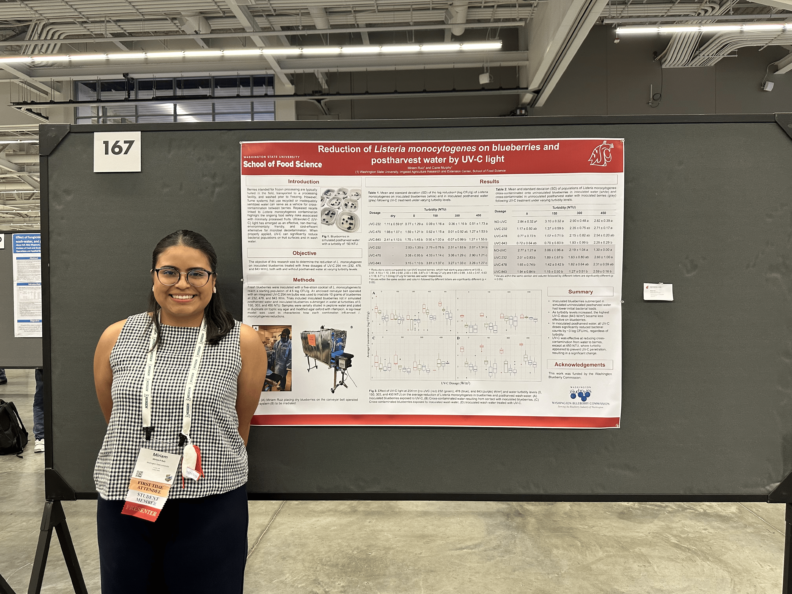
Miriam Ruiz is a master’s student researching the growth and survival of levels of Listeria monocytogenes on blueberries and raspberries stored at refrigeration and freezer temper, as well as the reduction of L. monocytogenes on inoculated blueberries treated with UV-C light. Miriam studies under Dr. Claire Murphy in Prosser, WA.
Tell me a bit about your background – professional and/or personal?
I have a bachelor’s in Food Science and Technology and I’m currently getting a master’s in Food Science, with a focus in Produce Safety. I have experience in meat, poultry and dairy science as well as food safety and microbiology. After I got my bachelor’s I took a gap year and decided to be an intern at a dairy farm, which give me a great insight into managing operations and personnel.
What drove you to pursue Food Science?
Before my bachelor’s, I was very interested in studying nutrition, but then I learned about food science and technology, and I thought it was a more complete approach to food production and processing. I was very interested in the behind the scenes and how many paths you can pursue with a degree in food science. So, I decided to go in that direction. A lot of different sciences are related to Food Science, so I could also pursue something else in the future if I wanted to.
Can you describe your research interest and what made you pursue it?
We focus on everything to do with produce. We mainly work with cherries, berries, and apples. Washington state is known for being one of the biggest producers for those crops in the United States. My main research focuses on assessing the survival of Listeria monocytogenes in berries during cold storage. I am also looking at intervention strategies through UV-C light to reduce the risk of cross-contamination from water to produce.
After meeting with Dr. Murphy and learning more about her appointment as an extension specialist, I decided to pursue the opportunity. There is a lot of collaboration with industry partners and real-world scenarios beyond the lab setting and I pictured myself doing research that directly impact the food production industry. Produce is so minimally processed and there’s always a risk of cross-contamination. Teaching about good practices during manufacturing and food safety principles and to promote food safety was very interesting and that made me want to take it.
I saw that your research article, “Survival of Listeria monocytogenes on Blueberries and Raspberries Stored at 4 °C and −18 °C” was published in Foods MDPI. What do you think are the next steps with this research?
The research had specific objectives and we were only going to be looking specifically at Listeria monocytogenes during a specific period of time. This project was developed in response to available funding and to address a gap in the literature regarding the impact of this resilient pathogen on fresh and frozen berries. So with that, the results we got showed that if there was a contamination event out there in the industry, the bacteria can survive on berries for up to 5 months and a half in the freezer. This past February there was a class I recall of over 55,000 pounds of frozen blueberries, over potential contamination with Listeria. Those companies process so many fruits, and if the sampling comes out positive, they have to do recalls and tell people please don’t consume these because they can potentially be contaminated, let’s not risk it.
Regarding what to do next, our objectives were so specific so we couldn’t do other things, for example deteriorating organisms like fungus and how they affect the survival of L. monocytogenes and how they interact. We could see that the berries were getting moldy during storage, but we were not evaluating that. It would be interesting if someone else came along and looked into it, because berries are so perishable and get moldy very fast.
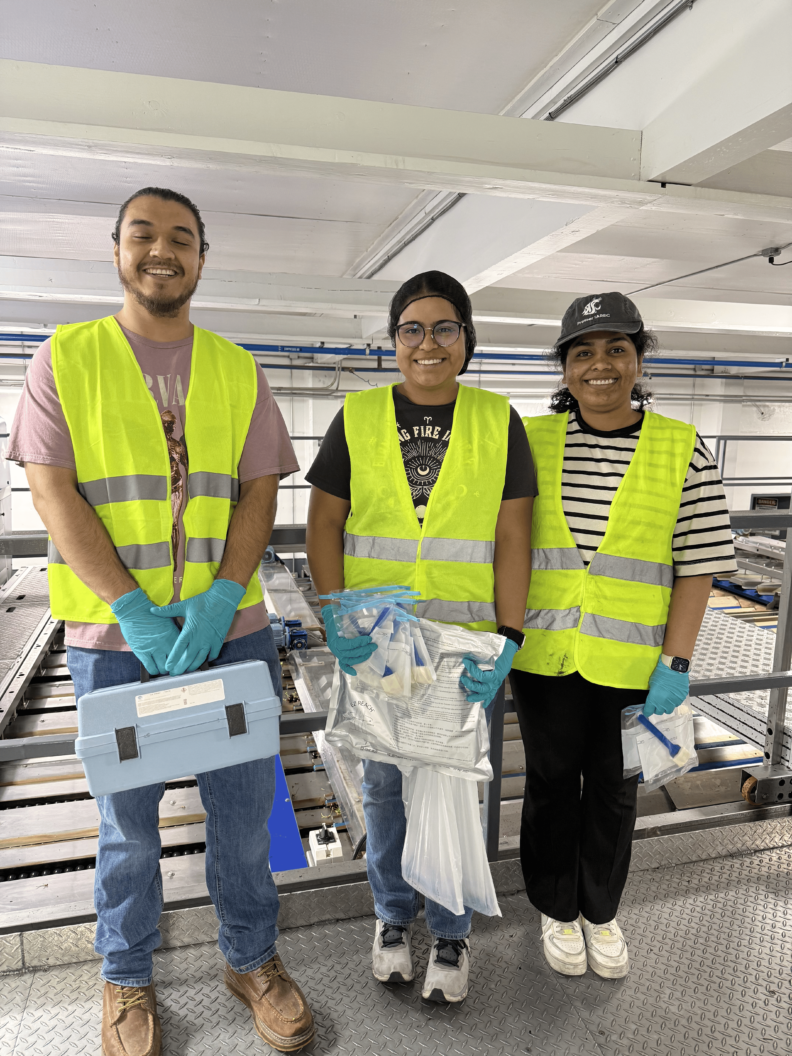
It would also be interesting to experiment with other pathogens of interest as well. Looking at previous outbreaks or recalls associated with berries, bacteria like Salmonella, Escherichia coli and viruses like Hepatitis B need to be further studied.
This research was actually the first phase of my thesis project, to show how there is a risk of the pathogen surviving despite it being in low temperatures. The second phase of the project was using UV-C light as an approach in your packing line, where you can inactivate the bacteria on either the water used to wash or the berries themselves. While we didn’t evaluate it, there hasn’t been any issues with quality or affecting their color, texture, or their nutrients. So, we thought that this would be a great thing to suggest to the industry, because it’s fast, effective, and can be very profitable for them in the long term.
What are the pros and cons using UV-C light versus chlorinating the water?
It all depends on the goals that the packing house has. You do have to control certain things when using UV-C. We saw slightly higher reductions of bacteria when combining berries in water treated with UV-C. You also have to control the turbidity in your water, or in simpler terms, how dirty you water is. Water is an expensive resource and not everyone has a specific timeline of how often they’re changing it. A lot of industries are already recirculating or reusing it for a day or even a week. We saw treatments where the turbidity was higher and therefore, UV-C light didn’t inactive as many cells in comparison to clear water.
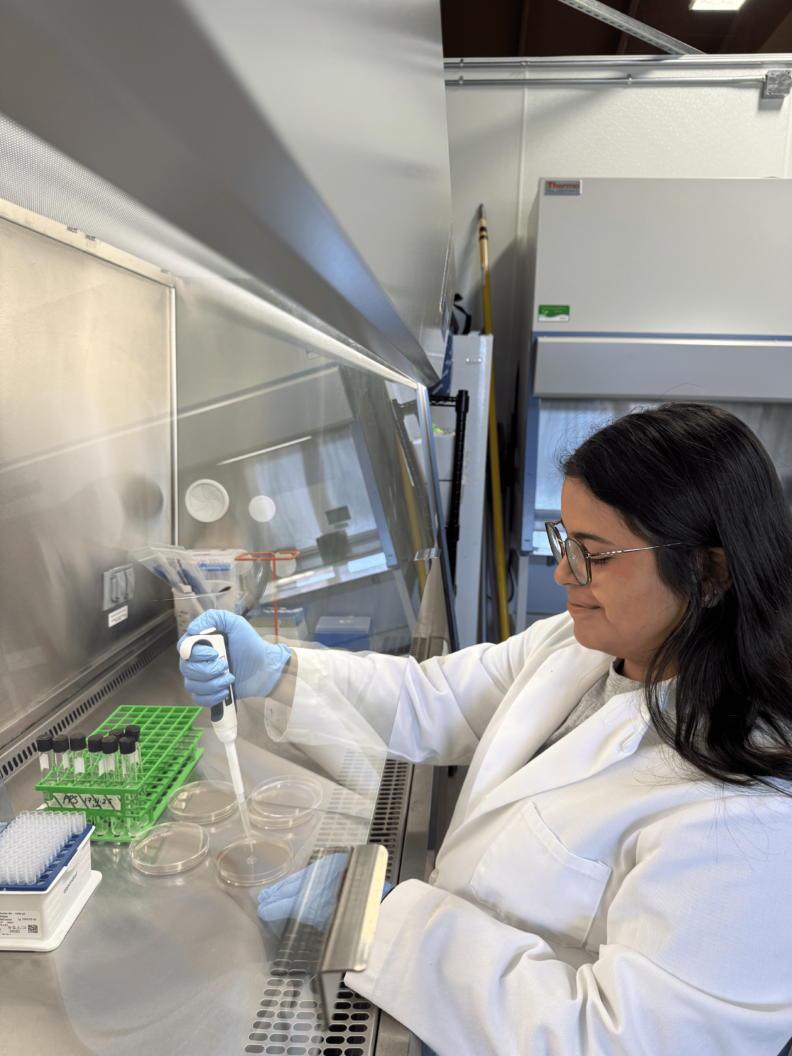
There is also equipment that the industry can purchase and adapt their lines with, but I think the reason behind everyone using chlorine is because it’s cheap and if proper monitoring, easy to control and measure. Adding another step in the line can be tricky if you don’t want to compromise the design of your plant. Still, I think UV-C is very beneficial and can offer another layer of prevention of cross-contamination.
What is something you wish more people knew about food safety?
People have been consuming foods for centuries, and every year or decade there are new proposals or technologies in response to the growing demand for convenient, safe and accessible food. As consumers, we generally trust that the food we purchase meets high standards of quality, safety and nutrition.
However, one area that deserves greater attention is proper food handling at home and in hospitality services. Cross-contamination can happen anywhere if precautions are not taken. Simple steps – such as handling raw poultry carefully, cooking beef to appropriate internal temperatures, using different cutting boards for produce and raw meat, and washing hands thoroughly – are critical in preventing foodborne illness.
Hand hygiene is often overlooked, and you would be surprised at how much bacteria our hands can carry. You always want to make sure that you’re not transmitting any microbes to yourself, your children, or the people around you.
Is there a research project that you’ve worked on previously that you would like to return to?
During my bachelor’s, I was collaborating on this project where we took samples of different spots in a During my bachelor’s degree, I collaborated on a project in which we collected samples from various locations within a beef slaughterhouse, as well as from different areas of the carcasses. The objective was to determine whether the bacterial profile of ground beef varied depending on the cut of meat used, and to assess whether lymph nodes—sometimes not removed during processing—could contribute to E. coli contamination in the final product.
I think it’s great when research meets the real world because you can see the many different approaches you can take, and research is a great way to answer questions that the industry has. Big facilities cannot always be monitoring certain things, so complying with sanitation procedures and good manufacturing practices is very important for them. I think this is something that I would like to do again.
What do you see as one of the most pressing food safety issues today?
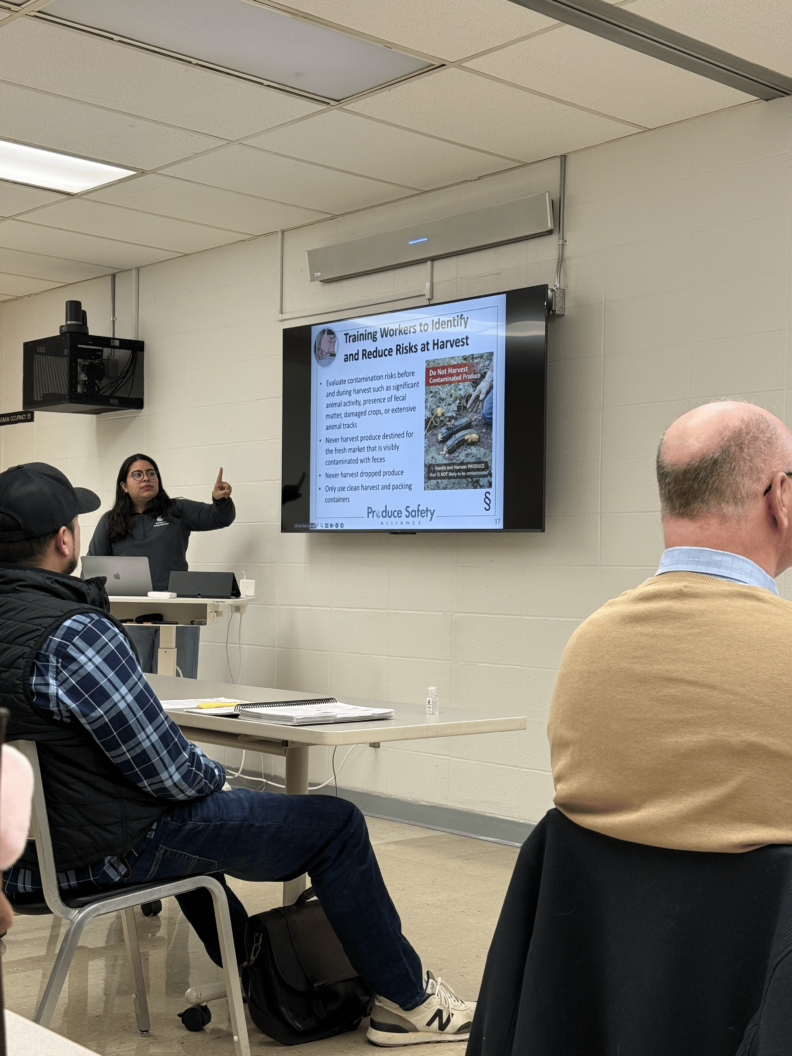
We have been training supervisors and managers on good agricultural practices and post-harvest handling; however, a common challenge across operations is worker training and compliance. Frontline employees are directly responsible for handling the product, making their role critical in maintaining food safety. Strengthening worker training and improving compliance is a key priority for reducing contamination risks and minimizing product loss.
What has been a favorite memory or accomplishment of yours during your time at WSU?
Last year, I think I grew the most, not just as a young scientist but as a person. I think I stepped out of my comfort zone many, many times. I was talking to my lab partners about [presenting research] and how we’ve all become more fluent and comfortable since we had so many opportunities to showcase our research and provide trainings on specific topics, as well as to summarize your research so it can reach a wider audience. It’s challenging, but I’ve learned a lot from all those opportunities. It’s made me more comfortable and confident, so I think that’s been great.
At our research station in Prosser, we have the Graduate Student Association, and I got the chance to be the president. We did so many activities where we were not only engaging as students within the student body, but we were collaborating and socializing with the staff, WSDA employees and postdoctoral fellows. It was great to build community despite all the different schedules and to hear our students needs to make the graduate school experience more enjoyable for them in this area.
What are you hoping to do after you graduate?
I’m looking to join the industry as I graduate. I want to participate in any food safety and quality assurance positions. I’ve had so many opportunities of setting a role model or learning from other great examples, so I think that would be an enriching experience I look forward to.
Do you have any advice for undergraduate students looking to pursue a graduate degree?
Committing to grad school requires a lot of hard work, with long hours of research, studying, doing field work… Before committing to a program that is something you’re going to have to do and you’ll have to give up on a few things and your routine might change. If you’re comfortable with that, I think grad school will be great and there’s no “one-size-fits-all” tip that works for every student.
One big thing I’m sure we all have in common is navigating life as a young adult handling its own finances. There are opportunities out there where professors can fund your education 100% through an assistantship. Explore the college you are interested in, learn more about their programs and send cold messages to professors asking for any funded positions showing interest. Higher education can be completely funded, which can alleviate a huge financial burden.
Any parting words?
There are so many opportunities out there, you just have to look for them, pursue them and work on yourself. Participate and engage with things that you are passionate about and it will help you in the long term.
I think it’s been very inspiring to see great role models like my advisor. When I started, I thought she was a great example of the next young generation of scientists, so I was like, “Wow, I can do that too!” I don’t have to have many years of experience, and I can take place anywhere. I hope one day that I can be an example for my nieces and nephews or Latinos looking to pursue higher education and taking positions that are relevant.