PULLMAN, Wash. — Barakatullah Mohammadi is a doctorate candidate researching Food Safety and Microbiology in Dr. Stephanie Smith’s lab.
Tell me a bit about your background – professional and/or personal?
I grew up in a farming family in Herat, Afghanistan. I did my undergraduate studies back in Afghanistan, majoring in food science. My first two years of college were in general agriculture studies. After that, a USAID project with Purdue University established the Department of Food Technology in Afghanistan for the first time. I joined this department and finished my bachelor’s degree in food science and technology.
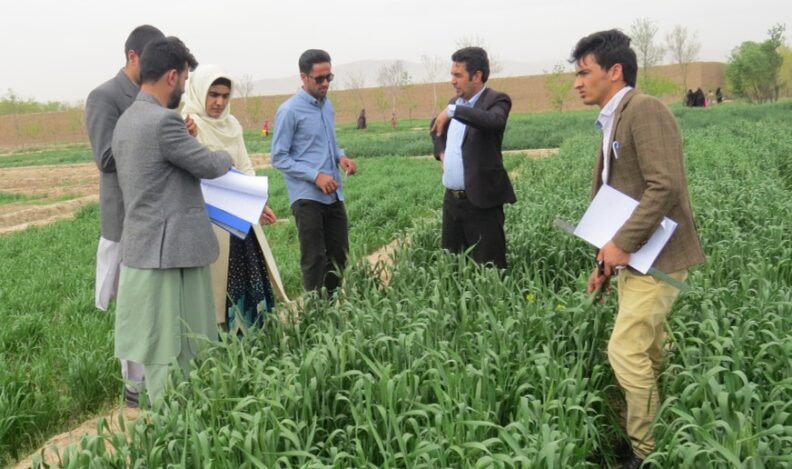
After I graduated, I worked with the Grain Research and Innovation Project, which was implemented by Michigan State University in Afghanistan, for about a year. Then, I worked with the Relief International Organization, where I was a Good Agricultural Practices trainer with a Food Security Project. I was training farmers on how to apply good agricultural practices to increase the yield and make the products safer.
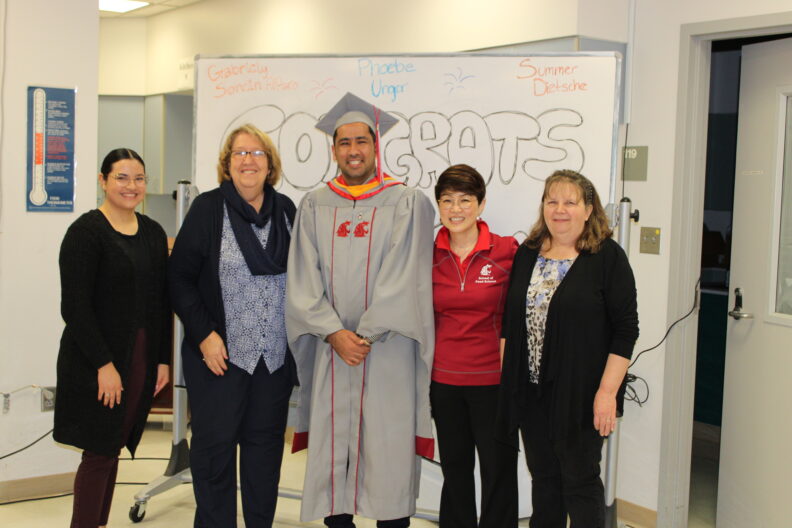
In August 2021, I came to the United States to start my master’s program in food science here at WSU. This opportunity was given to me by the US Department of State through a Fulbright Scholarship. I completed my master’s degree in Summer 2023 and started my PhD right after that in the same lab with Dr. Stephanie Smith.
What drove you to pursue Food Science?
As I lived in a rural area, I witnessed how farmers are struggling with unsustainable systems. Farming was not a business there; it was just for feeding the family, which farmers were struggling with bad economic conditions during the winter season. Seeing these situations and, more importantly, a specific case where I was a group of volunteer educators who would go from home to home and teach basic hygienic conditions, were the main reasons that drove me toward agriculture and food sciences.
At the time, it was not a direct path for me to study food science. Honestly, I was thinking of the issues with agriculture as a political problem. At first, I wanted to study political science, but with the college system in Afghanistan, which student have to pass an entrance exam and then they will be placed into a major, which is almost impossible to change. Being placed in a major is also not based on students’ choice; there are many factors that affect. Luckily, I was placed in the Agriculture Extension and Economy department. After the food technology department was established, I again had to pass several layers of exams to enter the food science major.
Can you describe your research interest and what made you pursue it?
During my junior and senior years in college, I enjoyed industry visits where I found there was literally no food safety management system in place. I also did short term internship with the Department of Health in my city, where I was part of a group that was auditing the restaurants and small-scale food producers. The auditing was based on very basic hygienic conditions, not a standard system. These reasons determined my passion for food safety and microbiology.
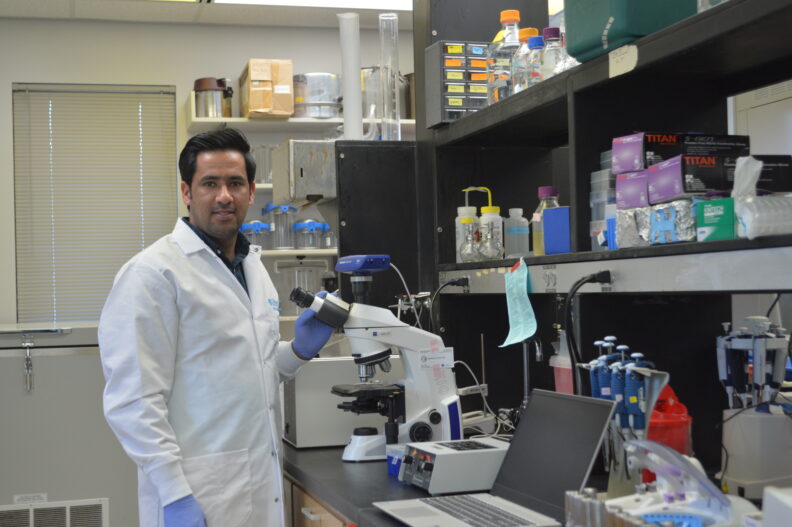
My undergraduate research thesis was on understanding the microbial safety of Herat Saffron, which has the highest quality in the world. For my master’s and Ph.D. research programs, I followed a similar pathway, working on microbial safety of food, but focused more on Bacillus cereus, which is a spore-forming pathogen and is a problem for ready-to-eat and minimally processed foods. With this research, I directly help the Washington state noodle producer to produce safer products and comply with regulatory requirements by finding useful control and detection methods of B. cereus in foods. I believe that my research will contribute to the knowledge of B. cereus, which has not been focused on enough in the US as an opportunistic foodborne pathogen.
What’s something you wish more people knew regarding food safety?
The main point of food safety is to reduce the number of people who get sick and die because of eating unsafe food. This is not all about the food safety professionals, researchers, government, and food industry; everyone should be aware of basic food safety principles to help save more lives.
Another important point I wish people knew more about is food waste. Food waste is a huge problem. Many people are suffering from food insecurity and need safe and nutritious food. Food waste is not just because we don’t eat half of a plate of food and then throw it away. There’s a large amount of food wasted due to recalls. For example, if the product is associated with pathogens, then the company needs to recall all of those products, which then get destroyed. There’s also another aspect where some people throw away food because they believe it wouldn’t be okay to eat the following day, yet if they’re given a little bit of knowledge of how to store it so that they can keep it fresh and safe, then they can prevent that waste of food. Let’s say that one-third of all foods are wasted in the world. Imagine if we could reduce that just by understanding and applying food safety principles in our kitchen.
What do you see as the most pressing food safety issue today?
Controlling foodborne pathogens in ready-to-eat food. With current eating habits that favor easier and faster access to food, we have a lot of ready-to-eat products in the market, which increases the possibility of a food safety risk. Researchers have been working on this, but our eating habits are changing, and microbes are mutating over time. This situation requires continuous research programs to update the prevention practices regularly.
What has been your favorite accomplishment of yours during your time here at WSU?
I am proud of many things that happened to me here at WSU. Since I’ve been given the opportunity to study in the US, it’s nice to be able to give something back to the country [with my work here]. I am so happy that this has already been started by working with state producers and helping them with food safety problems. Completing my master’s program with Fulbright and my PhD with the FFAR program are also my favorite achievements.
Looking ahead, what are you hoping to do after you graduate?
I’m thinking about working in the industry, and I want to apply my research into real world of the food sector, but I don’t have any specific plans in mind right now since I’m a bit far from graduating. In the long term, I would really like to stick to my initial goals of helping third-world countries that are in need of food safety management systems.
Any advice for undergraduate students looking to pursue a graduate/doctorate degree?
Know why you want to pursue a graduate degree. With no specific plan or goal, it becomes a lot harder. I think many graduate students experience some hard times that lead them to think about giving up. However, having a specific goal can help you get through the challenges of graduate school.
They should also try to find the perfect program that fits them well. I’d encourage them to try some sort of internship that they can take for a semester and then see if it’s something that they really want to do
Would you recommend working in the industry first before pursuing a graduate degree? Having worked for two years before your Masters, was that helpful?
I personally like to work after each degree, because it could help you with your next degree, and then you have a better idea of what’s going on in the real world outside of academia. It will also help you define your research program. But it doesn’t work for everyone, for some people it is hard to move from work to study because these two have completely different lifestyles. In that case, they may continue graduate school right after their undergraduate.
Any parting words?
I want to thank you, the people whom I got to know here, and especially Stephanie Smith. She’s not just my research advisor, she’s a mentor and a supporter of my professional life as well as my personal life. I’m thankful for the School of Food Science, nice people like you, Dr. Soo-Yeun Lee… I came here with a different idea, but here I found that people are very friendly and really supportive. I also appreciate the programs and the organizations that have helped me throughout my time at WSU, such as the Fulbright scholarship and FFAR fellowship, which helped me work on my soft skills, besides the technical research skills.